
Table of Contents
A Surprising Stat That Changes Everything
Only 17 states require a personal finance course to graduate high school. That means the majority of kids in this country will leave home without ever learning how a checking account actually works — not in any classroom, anyway.
⭐ Our Top Pick
Acorns Early
Best kids money app for ages 6–18 · Debit card + investing in one app · Parent controls included
Open Free Account →Sponsored · WealthSprout may earn a commission if you sign up through our link, at no extra cost to you.
The nonprofit Next Gen Personal Finance (NGPF) found something that genuinely stopped me in my tracks: kids who manage real bank accounts — not pretend ones, not apps with fake money — make measurably better spending decisions than their peers. Not eventually. Pretty quickly. The act of watching real dollars disappear from a real balance rewires how they think about a purchase.
My 9-year-old, Caleb, is my proof. Last spring he got a $25 Roblox gift card from his grandma. He spent it in about 40 minutes. Zero regrets, zero hesitation — because it didn't feel like money to him. Six months later, after we'd opened his checking account and he'd watched his debit card get declined (more on that in a sec), he got another $25 card. He sat with it for three days before he spent a dime. Same kid. Completely different relationship with money. That's what a real account does.
The Real Issue Nobody Talks About
Here's what I hear from parents constantly: "I barely feel confident about my own finances — how am I supposed to teach my kid?" That anxiety is real, and it's not your fault. The fear of overdraft fees, of something going wrong, of accidentally teaching your kid a bad habit — it's enough to make you just... wait another year.
I didn't fully understand how a checking account worked until I was 34. I'm not exaggerating. I knew how to use one, but I didn't know the difference between available balance and current balance, I didn't know what "processing" meant, and I definitely didn't know overdraft protection was something you could turn off. I just assumed it was there to help me.
My daughter Lily, who's 11 now, taught me something the hard way about two years ago. She'd gotten access to a small digital allowance through an app, and she spent $22 on digital stickers inside a game. Twenty-two dollars. On stickers that exist only on a screen. My first instinct was to be frustrated — but then I caught myself, because honestly? I've made worse calls with money I barely understood. The real problem wasn't Lily. It was that neither of us had a script for what to do next: how to talk about it, what to learn from it, how to make it a habit instead of a horror story.
No one gave us that script. That's the actual gap. Not the account — the conversation around it.
Step-by-Step: Finding the Right Kid Checking Account
Here's exactly what I'd do if I were starting from scratch today. No fluff, just the actual steps.
- Check the fee structure — $0 monthly, $0 minimum, free ATM network. Any monthly fee on a kid's account is a non-starter. Look for $0 monthly maintenance, no minimum balance requirement, and either free in-network ATMs or ATM fee reimbursements. Chase First Banking, Capital One MONEY, and most credit union youth accounts all hit this mark. If a bank charges $4.95/month for a kid account, walk away.
- Look for real parental controls and real-time visibility. You want to see every transaction as it happens — not in a monthly statement you forget to open. Look for accounts that send you instant push notifications when your kid's card is used. Bonus points if you can set spending limits by category or freeze the card from your phone in 10 seconds flat.
- Decide: bank, credit union, or fintech? Banks (like Chase or Capital One) are convenient and widely trusted. Credit unions often have better interest rates and lower fees but require membership. Fintech apps like Greenlight add powerful features but aren't always FDIC-insured directly — check that your money is held at an FDIC-insured bank partner. Credit unions are NCUA-insured, which is the same level of protection. When in doubt, the CFPB's bank account resource is a solid, unbiased starting point.
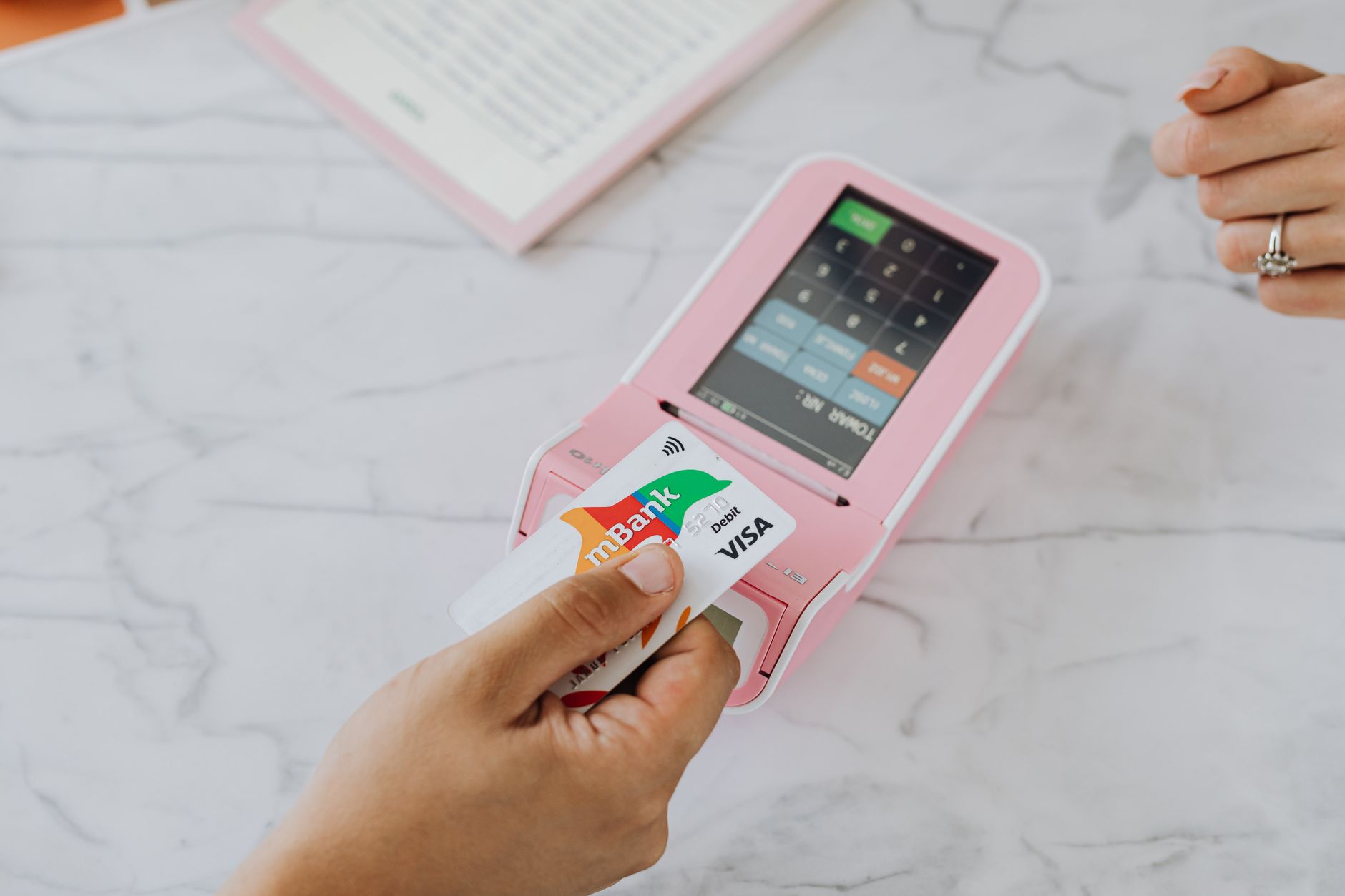
- Turn off overdraft protection. This is the whole lesson. I know it sounds counterintuitive — isn't protection... good? Not here. With overdraft protection off, when your kid's balance hits $0, the card declines. That's it. No $35 fee, no negative balance, no awkward call to the bank. A declined card at the register is one of the best financial lessons money can't buy. Most banks auto-enroll you in some version of overdraft — go into settings and turn it off manually within the first week of opening the account.
- Set up small, regular deposits — even $5/week. Consistency matters more than the amount. Whether it's allowance, chore pay, or birthday money, making deposits a recurring habit teaches your kid that accounts need to be fed. Check out our guide on how to make money as a kid for practical ways your kid can start contributing their own dollars. And if you haven't tried the 3-jar system alongside the account, it's a great pairing — one jar for spending, one for saving, one for giving, mirrored in their actual account.
Quick Comparison: Kid Checking Accounts at a Glance
| Account | Min Age | Monthly Fee | Parent Controls | Interest on Balance |
|---|---|---|---|---|
| Chase First Banking | 6+ | $0 | Strong (app-based spend controls) | None |
| Capital One MONEY | 8+ | $0 | Good (real-time notifications) | 0.10% APY |
| Alliant Credit Union | 13+ (teen) | $0 | Moderate (joint access) | 0.25% APY |
| Greenlight | Any age | $5.99–$14.98/mo | Excellent (per-store spending limits) | Up to 5% (on savings tier) |
| Local Credit Union (avg) | Varies | $0 | Varies widely | Often 0.5–3% on first $500 |
Note: Rates and features change — always verify directly with the institution before opening an account.
What Parents Get Wrong
These aren't criticisms. I've made most of these mistakes myself. Here's what I see come up over and over in parent communities — and exactly how to course-correct.
1. Keeping Overdraft Protection On
I mentioned this above, but it's worth its own spotlight because banks make it very easy to miss.
A $35 overdraft fee on a $4 in-app purchase doesn't teach your kid anything except that banking is confusing. A declined card teaches them the balance matters — every single time.
2. Opening the Account and Never Looking at It Together
The account itself does nothing without the conversation. A 10-minute weekly check-in — sitting next to your kid and scrolling through the last week's transactions together — is worth more than any financial literacy app. Ask "what's one purchase you're glad you made?" and "is there one you'd skip next time?" No lecture needed.
Caleb and I do ours on Sunday nights, usually while he's eating a snack. It takes 8 minutes. It's become a habit he actually looks forward to, partly because I let him bring up whatever he wants to talk about.
3. Picking a Bank Based on Familiarity, Not Features
"I've banked with Chase for 15 years so I just opened one there" is not a bad reason — but it's worth spending 20 minutes comparing. Investopedia's teen checking account roundup is updated regularly and breaks down features side by side. Your credit union might blow the big banks out of the water on interest rate and prizes — things that actually motivate a kid.
4. Treating the Account Like a Punishment Ledger
If every time you look at the account together it's to talk about what your kid did wrong, the account becomes something to dread — not a tool they want to use. Celebrate the wins out loud. Your kid saved $40 toward something they wanted? That's huge. Say so specifically: "You said no to three smaller things so you could say yes to this one bigger thing — that's actual discipline, and it's hard."
The goal isn't a perfect spender. The goal is a kid who has a relationship with their own money instead of a fear of it.
Quick Wins: 3 Things You Can Do This Week
- Compare three accounts in 20 minutes. Open tabs for Chase First Banking, Capital One MONEY, and your nearest credit union's youth account page. Check: monthly fee ($0?), minimum balance ($0?), overdraft policy (can you turn it off?), and parent app features. Pick one and start the application — it usually takes less than 15 minutes online.
- Set up one recurring deposit, even $5/week. Link it to your own account and schedule it for the same day every week — Friday works well because it feels like a "payday." Your kid gets a real deposit notification, real money appears in a real account, and the habit starts before you've thought of anything else to do.
- Schedule your first 10-minute money check-in. Put it on the calendar for this weekend. Sit next to your kid, pull up the account, scroll through the week together. You're not grading them — you're just looking. That alone makes it normal. For more on getting started, see our full guide on checking accounts for kids.
What Parents Are Actually Asking
Sometimes the best financial advice comes from other parents who've already been exactly where you are. Here are two conversations I found genuinely useful — and my own take on each.
"I opened a checking account for my 7-year-old through Chase. It's joint, so I'm on the hook if they overdraft. I turned off overdraft protection immediately. Kids learn fast when a card gets declined at the store."
This parent nailed it. The joint account structure means you have visibility and legal responsibility — which sounds scary until you realize it's actually what keeps the guardrails up. And yes, that moment at the register when the card declines and your kid has to put something back? It lands differently than any conversation you could have at home. I've watched Caleb's face go through an entire emotional journey in about 45 seconds — and come out the other side with a plan to save up.
"My credit union had a way better youth program than the big banks. No fees, they got a prize when they hit their savings goal, and the interest rate on the first $500 was actually decent."
This is exactly why I put "local credit union" on the comparison table — because they wildly outperform on things that actually motivate kids: goal-based prizes, higher interest on small balances, and a staff that actually knows your name. If you've never looked into your local credit union's youth account, their website's worth 10 minutes of your time this week. The interest rate on the first $500 can be 1–3% at some credit unions, versus basically nothing at most big banks.
The Bottom Line
A kid checking account isn't a big financial move — it's a small, concrete one that creates the conditions for real learning to happen. The account is just the container. What matters is what you do with it: the weekly check-ins, the declined cards, the deposits that feel real because they are real, and the conversations that finally have a starting point.
You don't need to have everything figured out to open an account with your kid this week. I didn't. I figured most of it out alongside them, and that turned out to be the whole point.
This article may contain affiliate links. WealthSprout earns a small commission if you purchase through our links, at no extra cost to you. We only recommend products we believe in. Nothing in this article constitutes financial advice — see our Financial Disclaimer.
Frequently Asked Questions
What age can a kid get a checking account?
Most banks and credit unions allow kids to open a joint checking account starting around age 6–8, with a parent or guardian as a co-owner. Chase First Banking accepts kids as young as 6, Capital One MONEY starts at 8, and Alliant Credit Union's teen account is available at 13. There's no universal rule — it depends entirely on the institution, so it's worth calling your bank or credit union directly to ask. Some local credit unions will open accounts for even younger kids with the right joint setup.
Can a kid have a checking account without a parent?
No — not until age 18 in most states. Until then, a parent or legal guardian needs to be a joint account holder. That's not just a formality: it means you're legally responsible for the account and can monitor every transaction. Think of it less as a restriction and more as a feature — you have full visibility without being controlling, because you're literally on the account with them.
What's the difference between a kid checking account and a regular joint account?
A kid-specific checking account is designed with guardrails: parental spending controls, no overdraft by default (or easy opt-out), no paper checks, and usually a simplified app experience. A regular joint account gives your kid access to all your banking features — including the ones that can get complicated fast, like wire transfers or linked credit cards. For most kids under 16, a purpose-built youth account is the safer, simpler choice. You can always upgrade as they get older.
Do kid checking accounts help build credit?
No — a checking account by itself doesn't build credit, because there's no borrowing involved. Credit is built through credit cards, loans, or secured cards, all of which require age 18+. What a kid checking account does do is build the habits and money management skills that make credit less dangerous when they do get access to it. Think of it as the foundation — not the roof. If building credit is your goal for your teenager, look into whether they can be added as an authorized user on your credit card at 15 or 16.
Should I choose a bank or a credit union for my kid's checking account?
Honestly, check your local credit union first before you assume a big bank is the better choice. Credit unions are NCUA-insured (same protection level as FDIC), tend to offer higher interest rates on small balances, and many have youth-specific programs with real incentives — like prizes when your kid hits a savings goal or a 2–3% rate on the first $500. Big banks like Chase and Capital One win on convenience and app polish. If your kid responds to visual rewards and goal-tracking, a credit union's youth program might actually be more motivating. Try calling your local credit union and asking specifically what their youth checking account includes — you might be surprised.