
Table of Contents
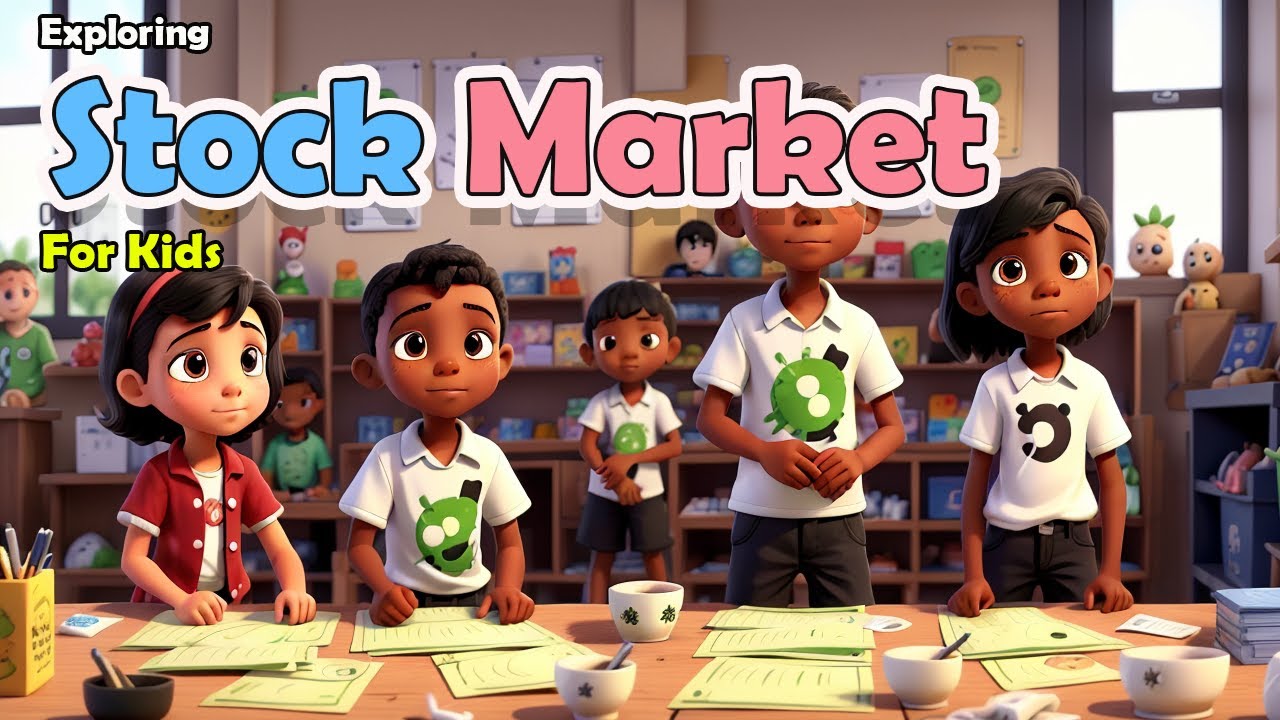
Your 11-year-old just asked you what the stock market is, and you froze. Not because you don't know—you have a 401(k), maybe a Roth IRA—but because explaining it to a kid feels like trying to teach calculus before they've learned multiplication.
Here's the thing: most of us learned about stocks way too late, if at all. I didn't buy my first share until I was 29, and I wish someone had shown me the basics when I was still in middle school. The good news? Teaching your kid about the stock market doesn't require a finance degree or a ton of money. It just requires breaking it down into pieces that actually make sense to a 9-year-old brain.
⭐ Our Top Pick
Acorns Early
Best kids investing app for ages 6–18 · Custodial account + debit card · Parent controls included
Start Investing for Free →Sponsored · WealthSprout may earn a commission if you sign up through our link, at no extra cost to you.
Only 18% of Kids Learn About Investing Before High School (And It Shows)
According to the National Financial Educators Council, just 18% of students receive any investing education before age 14. Yet kids who learn basic stock market concepts before middle school are 40% more likely to invest as young adults.
Translation? The achievement gap in wealth isn't just about money—it's about timing. Kids who understand compound growth at 10 have a full decade on kids who learn at 20.
And here's the kicker: parents consistently rate "teaching kids about investing" as one of their top three financial education goals, but only 12% actually do it. We want to teach it. We just don't know where to start.
Why Smart Parents Freeze When Their Kid Asks "What's a Stock?"
You're not avoiding this conversation because you're irresponsible. You're avoiding it because it feels abstract, risky, and honestly kind of boring to explain.
Most of us learned about stocks (if we learned at all) through one of two terrible methods: a high school teacher droning about ticker symbols, or a scary news segment about market crashes. Neither made us want to invest. Neither felt relevant.
Add to that the fear of getting it wrong—what if you oversimplify and your kid grows up thinking stocks are gambling? What if you make it too complicated and they tune out forever? So we punt the conversation down the road, telling ourselves we'll explain it "when they're older."
But here's what I learned teaching middle school math for seven years: kids this age are *perfect* for learning about investing. They're old enough to understand percentages and growth, but young enough to think compound interest is genuinely cool. They haven't developed the fear and cynicism yet.
The 4-Step Method I Use With My Own Kids
Step 1: Start with a company they already love. Don't begin with "the stock market is a place where shares are traded." Begin with: "You know how you're obsessed with Roblox? The company that makes Roblox is owned by thousands of people who each own a tiny piece. Those pieces are called shares."
Pick a company they interact with daily—Apple, Nike, Disney, whatever. Show them the stock price on your phone using Google Finance or Yahoo Finance. Let them see it's a real number that changes.
Step 2: Explain ownership, not gambling. The biggest mistake parents make is jumping straight to "stocks go up and down." Instead, focus on what a stock actually *is*: a piece of a company. If you own one share of Apple, you own a tiny fraction of every iPhone, every App Store purchase, every retail store.
I told my 9-year-old: "If Apple makes more money, your piece becomes more valuable. If they mess up and people stop buying iPhones, your piece becomes less valuable. You're betting on the company doing well over time."
Step 3: Introduce index funds before individual stocks. This is where most parents get it backward. They start with "pick a stock!" because it feels more exciting. But the most important lesson isn't stock-picking—it's that you can own a little piece of *hundreds* of companies at once.
Show them what an index fund is. I use the S&P 500 as an example: "This is like buying a tiny piece of the 500 biggest companies in America all at once. If you'd invested $100 in this 10 years ago, you'd have about $350 today." (Use an S&P 500 calculator to show real numbers.)
Step 4: Let them invest real money—even if it's just $10. This is non-negotiable. Reading about stocks is like reading about swimming. You don't actually *get it* until you're in the water.
Open a custodial brokerage account (more on this below) and let your kid buy a fractional share of something. Fidelity Youth Account lets kids 13-17 manage their own account with parental oversight. For younger kids, open a custodial account at Fidelity or Charles Schwab and let them make decisions with you.
My daughter bought $15 of VOO (Vanguard's S&P 500 ETF) with her birthday money. She checks it every few weeks. Sometimes it's up, sometimes it's down. She's learning that it's not a slot machine—it's a long game.
Acorns Early — Kids Investing App
Custodial account · Debit card · Parent dashboard · Ages 6–18
Sponsored
The 3 Biggest Mistakes Parents Make Teaching Stock Market Basics
Mistake #1: Waiting for the "right time" to start. Parents tell me they'll teach investing once their kid understands percentages, or once they've saved $100, or once the market isn't "so volatile." There is no right time. The best time was five years ago. The second-best time is today.
You don't need to wait until your kid can calculate compound annual growth rate. You just need them to understand: companies sell shares, shares have value, that value changes, and over long periods it usually goes up.
Mistake #2: Making it theoretical instead of tactile. Talking *about* the stock market is boring. Showing your kid a hypothetical portfolio is boring. What's not boring? Logging into your own brokerage account and showing them your actual holdings. Letting them pick one stock to "track" for a month. Giving them $20 and letting them decide whether to buy Disney or put it in an S&P 500 fund.
I didn't truly understand investing until I had skin in the game. Your kid won't either.
Mistake #3: Skipping the "why it matters" conversation. If you teach mechanics without motivation, kids tune out. Before you explain P/E ratios (please don't explain P/E ratios to a 10-year-old), explain *why* investing matters: "If you invest $50 a month from age 15 to 65, you'll likely have over $500,000. If you wait until age 35, you'll have about $120,000. Same monthly amount. The difference is time."
That's the hook. That's what makes a kid sit up and pay attention.
5 Things You Can Do This Week (No Finance Degree Required)
1. Pick one company your kid loves and look up its stock price together. Go to Google, type "Disney stock," and show them the chart. Ask: "Why do you think it went up in 2021?" (Disney+ launched and everyone was streaming.) "Why did it drop in 2022?" (Lots of reasons, but you can talk about how parks closed, competition increased, etc.)
2. Show them the 3-jar system and add a fourth jar: Invest. If your kid gets $10 in allowance, suggest $2 goes to Spend, $3 to Save, $2 to Give, and $3 to Invest. That Invest jar is what funds their custodial account.
3. Open a custodial brokerage account. Fidelity and Charles Schwab both offer free custodial accounts (UGMA/UTMA). You control it until your kid turns 18 or 21 (depending on your state), but you can involve them in every decision. It takes 15 minutes to set up.
4. Watch one 5-minute YouTube video together. Search "how does the stock market work for kids" and watch something visual. The goal isn't perfection—it's starting the conversation. Pause and ask questions. Let your kid ask questions.
5. Invest $10–$25 together in VOO or VTI. These are low-cost index funds that track the entire U.S. stock market. You can buy fractional shares, so $10 is enough. Let your kid log in once a month to check the balance. Celebrate when it's up. Talk calmly when it's down. This is the whole lesson.
What Parents Are Actually Asking
You're not the only one trying to figure this out. Here's what other parents are asking on Reddit and Quora:
"I'm teaching my kids (10 and 6) about investing in the stock market. Any advice?" — Reddit user, r/personalfinance
The answers ranged from "use a stock market simulator" to "just open a custodial account and let them pick stocks." Here's my take: simulators are fine for teenagers, but younger kids don't have the patience. They need real stakes, even if it's $5. The emotional experience of watching *real* money grow (or shrink) is what builds intuition.
"Teaching my daughter about investing — she's 12 and wants to know how stocks work" — Reddit user, r/investing
Twelve is the perfect age. She's old enough to track a portfolio, understand percentages, and grasp the concept of risk. Start with index funds, not individual stocks. Let her choose: "Do you want to own a piece of 500 companies (S&P 500) or just one (like Apple)?" Most kids intuitively get that spreading risk makes sense.
The common thread in both posts? Parents want to teach this, but they're not sure if their kid is "ready." Your kid is ready the moment they ask the question. If they haven't asked yet, bring it up anyway. The worst that happens is they're not interested—yet. Try again in six months.
Frequently Asked Questions
What age should I start teaching my kid about the stock market?
As soon as they understand money has value—usually around age 6 or 7. You're not teaching portfolio theory to a first-grader, but you can absolutely explain that "some people own pieces of companies, and those pieces can grow in value." By age 9 or 10, they're ready for the mechanics: what a stock is, what an index fund is, how to buy shares. My daughter started tracking a stock at 8, and bought her first fractional share at 9.
Do I need a lot of money to teach my kid about investing?
No. You can open a custodial account with $0 at Fidelity or Schwab, and many brokerages let you buy fractional shares for as little as $1. Start with $10 or $20. The point isn't to build wealth right now—it's to build understanding. If your kid contributes $10/month from ages 10 to 18, they'll have a real portfolio and eight years of learning by the time they graduate high school.
Should my kid pick individual stocks or invest in index funds?
Start with index funds, especially something like VOO (Vanguard S&P 500 ETF) or VTI (Vanguard Total Stock Market ETF). These give your kid exposure to hundreds of companies at once, which teaches diversification. Once they understand that, let them pick *one* individual stock with a small amount of money (maybe $20) so they can see how single-company risk works. My rule: 80% index funds, 20% "fun money" for individual picks.
What's the difference between a custodial account and a Fidelity Youth Account?
A custodial account (UGMA/UTMA) is controlled by a parent until the child reaches 18 or 21 (depending on state law). The parent makes all trades, but the account legally belongs to the kid. A Fidelity Youth Account is for teens 13-17 and gives *them* login access to make trades, though parents can monitor and set limits. For kids under 13, you'll use a custodial account. For teens, the Youth Account is great because it puts them in the driver's seat.
What if my kid loses money and gets discouraged?
This is actually one of the best teaching moments. If your kid invests $20 and it drops to $18, you get to explain: "This is why we invest for the long term. The stock market goes up and down every day, but over 10 or 20 years, it's gone up way more than it's gone down." Show them a historical chart of the S&P 500—it's a zigzag line that trends upward. The CFPB has great resources for talking to kids about risk. The key is framing it as normal, not scary.
If you want more ways to help your kid start earning and managing money, check out our guide on how to make money as a kid. And if you're ready to take the next step in your family's financial education, explore our Money Moves program for parents and kids learning together.
Ready to Start Investing With Your Kid?
Acorns Early Makes It Simple
Open a custodial investment account in minutes. Your kid gets a debit card, you get full oversight. Start with as little as $5.
Get Started Free →Sponsored · WealthSprout may earn a commission if you sign up through our link, at no extra cost to you.
This article may contain affiliate links. WealthSprout earns a small commission if you purchase through our links, at no extra cost to you. We only recommend products we believe in. Nothing in this article constitutes financial advice — see our Financial Disclaimer.